
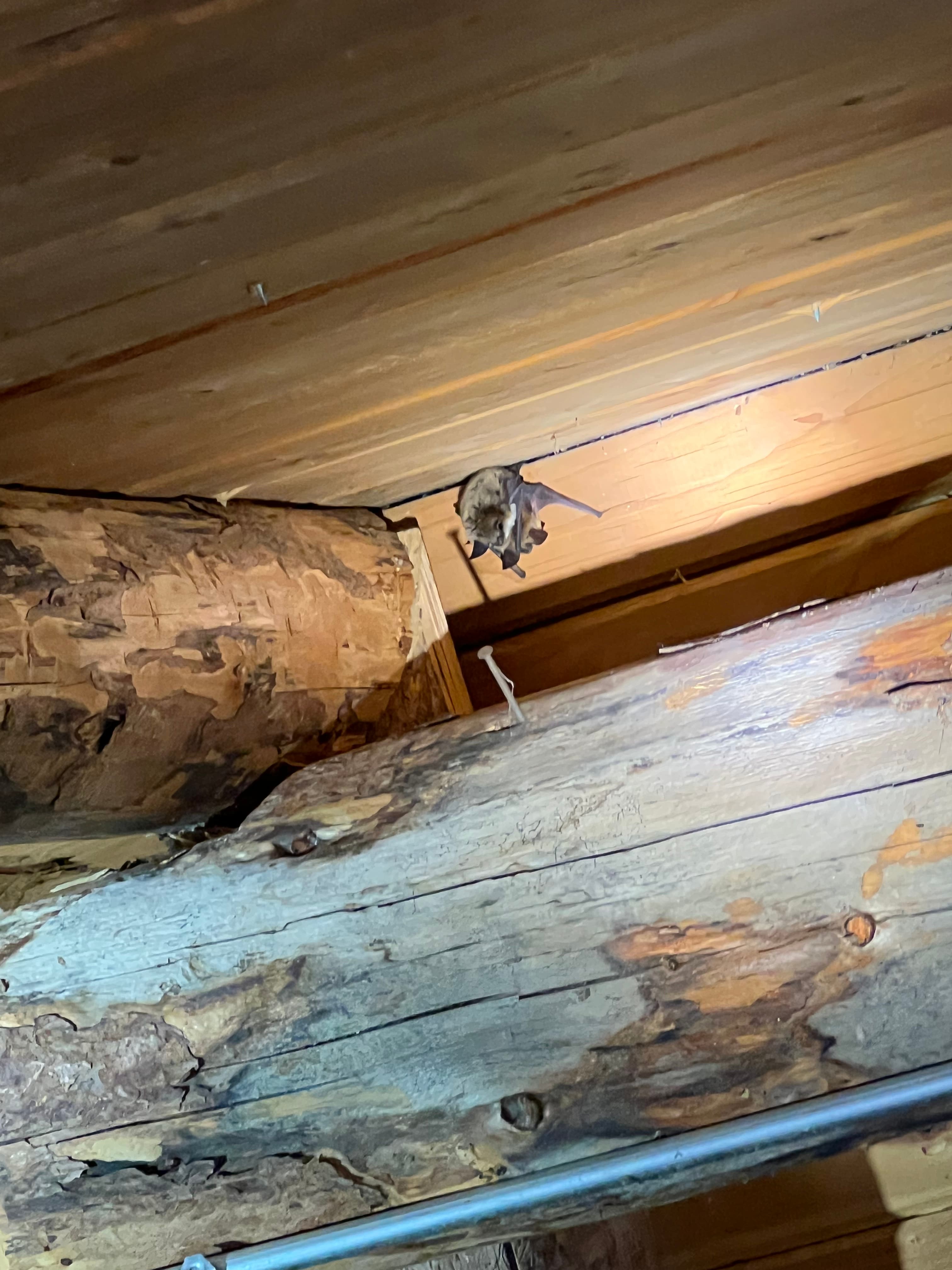
Why inland attics attract colonies
Eastern Washington summers push attic temperatures into the range maternity colonies prefer. Undisturbed insulation, ridge beams, and chimney chase voids mimic natural roost features. Older soffits, failed vent screens, and freeze-thaw gaps around flashing give bats a doorway without any chewing.
Common entry points on 509 housing stock
Watch ridge and gable vents, loose fascia, brick weep holes, chimney crowns, roof-to-wall flashing, and gaps where additions meet the original structure. Spokane craftsmans, Valley tract homes, and Tri-Cities ranch houses each fail in predictable places—we map all of them before installing one-way devices.
What not to do
Do not fog, poison, or foam every hole shut while bats may still be inside. Repellents and ultrasonic gadgets rarely clear a colony. Sealing during maternity season can strand pups. Skip DIY guano cleanups of heavy piles without PPE. Call for a plan that sequences inspection, exclusion, sealing, and cleanup.
The professional path
Phone consultation → attic/exterior inspection → humane one-way exclusion timed correctly → permanent sealing → optional guano remediation → two-year written warranty on whole-structure sealed openings. That is the standard Washington Wildlife Specialists uses across the inland 509.
Ready for help in Spokane, the Tri-Cities, or elsewhere in the 509? Start with bat removal or an attic inspection.