Service
Commercial bat removal for eastern Washington buildings
A bat colony in a school, church, apartment building, warehouse or packing shed is a facilities problem, a health question and a legal one at the same time. Washington DOH says bats are the only known source of rabies in the state, and its 2026 rabies table lists 27 positive bats through September, including Spokane, Yakima, Chelan and Asotin counties. Bats are also protected wildlife under WAC 220-200-100, so poisons, traps and sealing them in are off the table; WDFW calls humane exclusion the best and safest way to get rid of bats. Washington Wildlife Specialists has done that work since 2011 on commercial, institutional, multifamily and agricultural buildings from Spokane to the Tri-Cities, Yakima Valley and Wenatchee. This page covers how we scope a commercial building, how we time and phase exclusion around occupants, how guano cleanup is handled for workers and tenants, and what documentation and warranty you get.
Why commercial buildings attract large colonies
Big buildings offer what maternity colonies want: long runs of warm, dark gaps high off the ground. WDFW lists the common entry points as chimneys and masonry joints, gaps around window frames and siding, loose flashing, vents, eaves and the space where the roof meets the walls, and it notes that bats can use openings as small as half an inch. DOH’s school guidance says bats can fit through openings as small as a quarter. On commercial roofs those gaps show up along parapets and coping, expansion joints, metal-panel seams and ridge caps, unscreened louvers and rooftop-unit curbs, and behind signs and soffits. WDFW also says colonies of a hundred bats or more are common, which is why a church attic or school gym roof can hold far more bats than most homes.
Schools and childcare: what Washington DOH recommends
Washington DOH’s Pest Press guidance on bats in schools tells staff to keep people from touching any bat they find, close the room off, and teach children to tell an adult instead of picking a bat up. If a bat may have touched, bitten or scratched someone, DOH says to wash the site with soap and water and call the local health department and a health care provider right away, because bat bites can be too small to see. For a colony in the building it says to call a wildlife control operator and never trap bats inside a structure, and to seal entry points only when no bats are present, between mid-October and mid-March. We build school jobs around that: inspection and dusk counts, a written plan for the facilities office, exclusion scheduled outside the nursery season, and work timed to the school calendar.
Timing commercial exclusion to WDFW’s seasons
WDFW says pups are born in nursery colonies starting around May and that excluding or sealing while young cannot fly can trap them, so the main window is mid-August to mid-October, with early spring before births as the second window. Bats move into hibernation sites in late September or October and stay until April or early May, and WDFW advises leaving bats found hibernating in a building after October 15 alone until spring. For a facility that means a November or winter call usually becomes an inspection, a written scope and budget, and interior sealing to keep bats out of occupied rooms, with the full exclusion booked for the next window. That planning time often helps commercial owners who need board approval, a purchase order or a capital budget line.
Phasing work in occupied buildings
Commercial bat work rarely means shutting a building down. We map every entry, separate active exits from secondary gaps, and phase sealing by roof section, elevation or wing so classrooms, sanctuaries, offices, tenant units and loading docks stay in use. WDFW warns that forcing a large colony through one exit can cause a bat log jam that sends bats looking for another way out, sometimes into occupied space, so on large buildings we fit several one-way devices, watch the exits at dusk and check them after windy days. Lift or ladder work is scheduled for low-traffic hours, and we coordinate with facilities staff, property managers, pastors, principals or tenants before each phase and do a final walkthrough at the end.
Warehouses, ag buildings, packing sheds and cold storage
Metal and wood buildings across the Yakima Valley, Columbia Basin, Tri-Cities and Wenatchee Valley leak in long runs: ridge caps, eave closures, panel seams, overhead-door tracks, louvers and the joint where an addition meets the original building. We seal those with closures and inserts cut for the panel profile, hardware cloth and screen for vents, and exclusion-grade sealant matched to the surface, never expanding spray foam, which heat, cold, wind and sun in the 509 break down. Work in packing, food-processing and storage buildings is scheduled around harvest and production, and droppings on stored equipment, bins or product areas are handled as a separate cleanup scope. WDFW cautions that some old buildings, including those with shake or cedar-shingle roofs and no underlayment, may be impossible to exclude completely; if we find that, we say so in the proposal.
Guano cleanup and worker protection
Years of roosting in a commercial attic, steeple or warehouse loft can leave heavy guano. DOH says disturbing guano can cause histoplasmosis in some parts of the country, that guano can also hold bacteria and cause allergies when it becomes airborne, and that large piles should be cleaned up and disposed of by a professional. WDFW says that where large numbers of bats have roosted for years, it is safer to hire a professional for the work and the cleanup. CDC/NIOSH guidance for employers calls for controlling dust (such as wetting material before removal), containing and bagging waste, and fitting respirators and disposable protective clothing to the job. Our crews follow that approach, isolate the work area from occupied space, and remove contaminated insulation when needed. See our guano cleanup page for the full process.
Documentation for facilities, boards and insurers
Property managers, school districts, church boards and HOA committees need a paper trail. Commercial jobs include a numbered entry-point map, a photo log of each opening before and after sealing, the exclusion plan and device locations, dates of installation, monitoring and removal, a scope summary for any guano cleanup, and the warranty terms. If a bat was found in an occupied room, we note where and when so the health-department conversation has the facts. We can also price several buildings on one campus or portfolio together and phase them across seasons.
Targeted repair or whole-structure exclusion
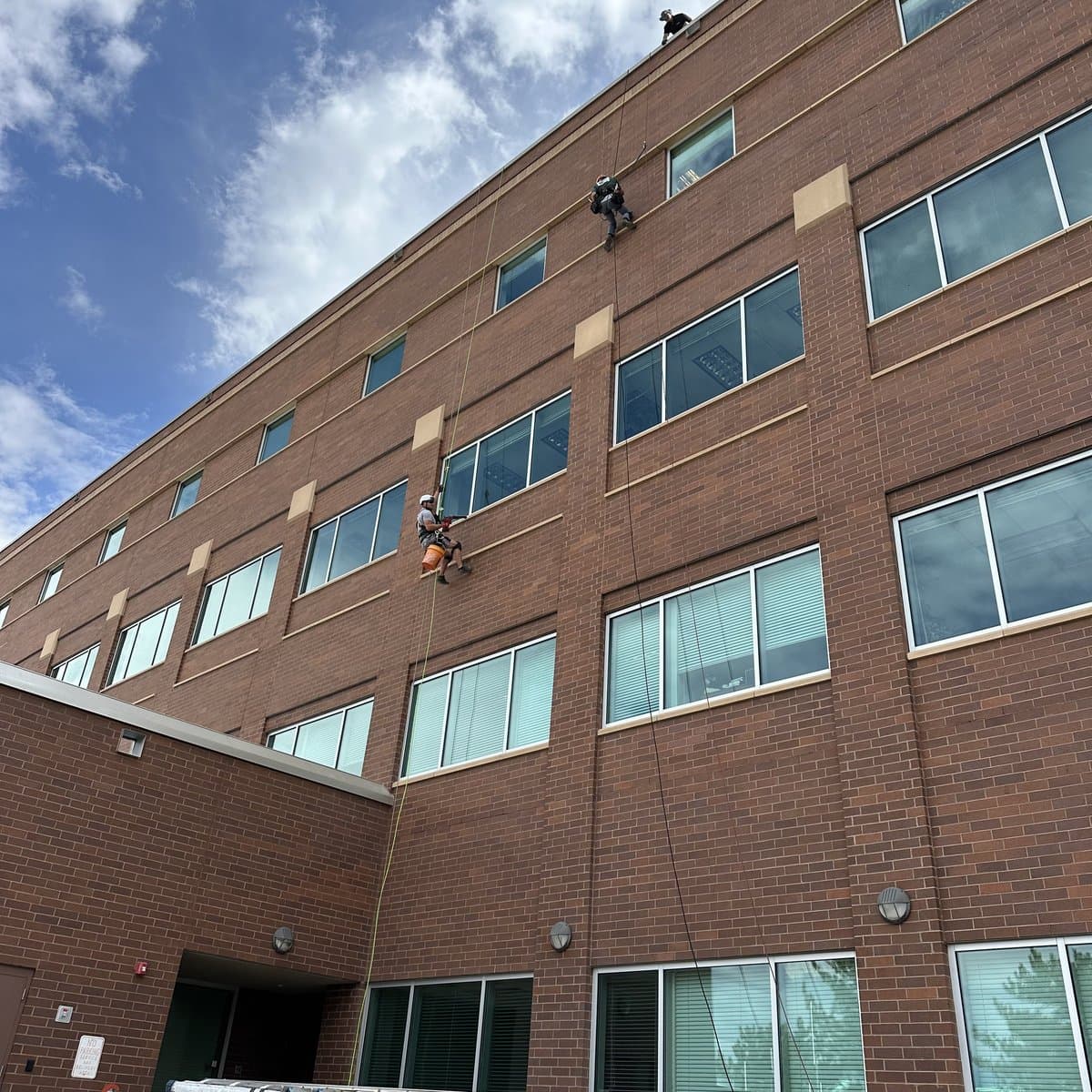
When it makes sense we price two options. A targeted repair seals the active exits and the gaps right around them. A whole-structure exclusion seals every potential entry on the building envelope. Only the whole-structure option carries our two-year written warranty, with lifetime warranties available on request, because sealing only the holes bats use today often moves the colony a few feet down the same roofline or parapet. We also fix other companies’ failed commercial jobs: removing failed foam and devices left in place, re-mapping primary and secondary openings, finishing the exclusion correctly and putting qualifying whole-structure work under our warranty. For entries above lift reach, such as tall brick facades and steeples, we plan rope or lift access; for the group’s dedicated high-rise division see highrisebatremoval.com.
Serving Spokane and eastern Washington—including Spokane, Kennewick, and Yakima. Start with an attic inspection if you are unsure what is in the structure.
Sources
- WDFW – Living with wildlife: Bats (entry points, exclusion timing, log jams, professionals)
- WDFW – Hiring a Wildlife Control Operator
- Washington State DOH – Pest Press: Bats in Schools (DOH 333-393)
- Washington State DOH – Rabies activity in Washington (2026)
- Washington State DOH – Rabies
- Washington State DOH – Histoplasmosis
- CDC/NIOSH – Preventing Histoplasma exposures at work
- CDC/NIOSH – Elimination and engineering controls (dust control, disposal)
- CDC/NIOSH – Personal protective equipment for Histoplasma
- WAC 220-200-100 – Wildlife classified as protected
Commercial FAQ
Related services
- Bat Exclusion
Professional bat exclusion for Spokane, Tri-Cities, Yakima and Wenatchee homes and buildings: full entry mappi…
- Guano Cleanup
Bat guano cleanup for eastern Washington attics, walls and commercial buildings: wet or HEPA removal under con…
- Attic Inspection
Bat inspections for eastern Washington homes and buildings: attic and roofline check, dusk exit watch, entry-p…
- Bat Removal
Humane bat removal for eastern Washington homes: inspection and dusk exit watch, one-way exclusion timed to WD…
Bat education guides
- Bat guides hub
Signs, species, attic roosts, maternity timing, damage, and exclusion explained for eastern WA.
- Signs of bats
Guano, odor, dusk fly-outs, and grease marks on Spokane-area homes.
- How exclusion works
One-way devices, sealing sequence, and why DIY fails.
- Bat damage & health risks
Guano, odor, insulation and what WA DOH says about rabies and histoplasmosis.
Bat removal by city
- Spokane bat removal
Local Spokane housing patterns, seasonality, and CTAs.
- Spokane Valley bat removal
Local Spokane Valley housing patterns, seasonality, and CTAs.
- Liberty Lake bat removal
Local Liberty Lake housing patterns, seasonality, and CTAs.
- Cheney bat removal
Local Cheney housing patterns, seasonality, and CTAs.
- Airway Heights bat removal
Local Airway Heights housing patterns, seasonality, and CTAs.
- Kennewick bat removal
Local Kennewick housing patterns, seasonality, and CTAs.
- All service areas
Full eastern Washington coverage map and city list.
Talk through commercial for your building
Serving Spokane, Spokane Valley, Liberty Lake, Cheney, Airway Heights, Moses Lake, the Tri-Cities (Kennewick, Pasco, Richland, West Richland), Yakima, Selah, Moxee, Union Gap, Wapato, Zillah, Toppenish, Wenatchee, East Wenatchee, Pullman, Clarkston, Walla Walla, College Place, Ellensburg, Sunnyside, Grandview, Prosser, Benton City, Medical Lake, Deer Park, Ephrata, and Millwood. Same-day available across the 509. Humane, WDFW-aware exclusion with a two-year written warranty.